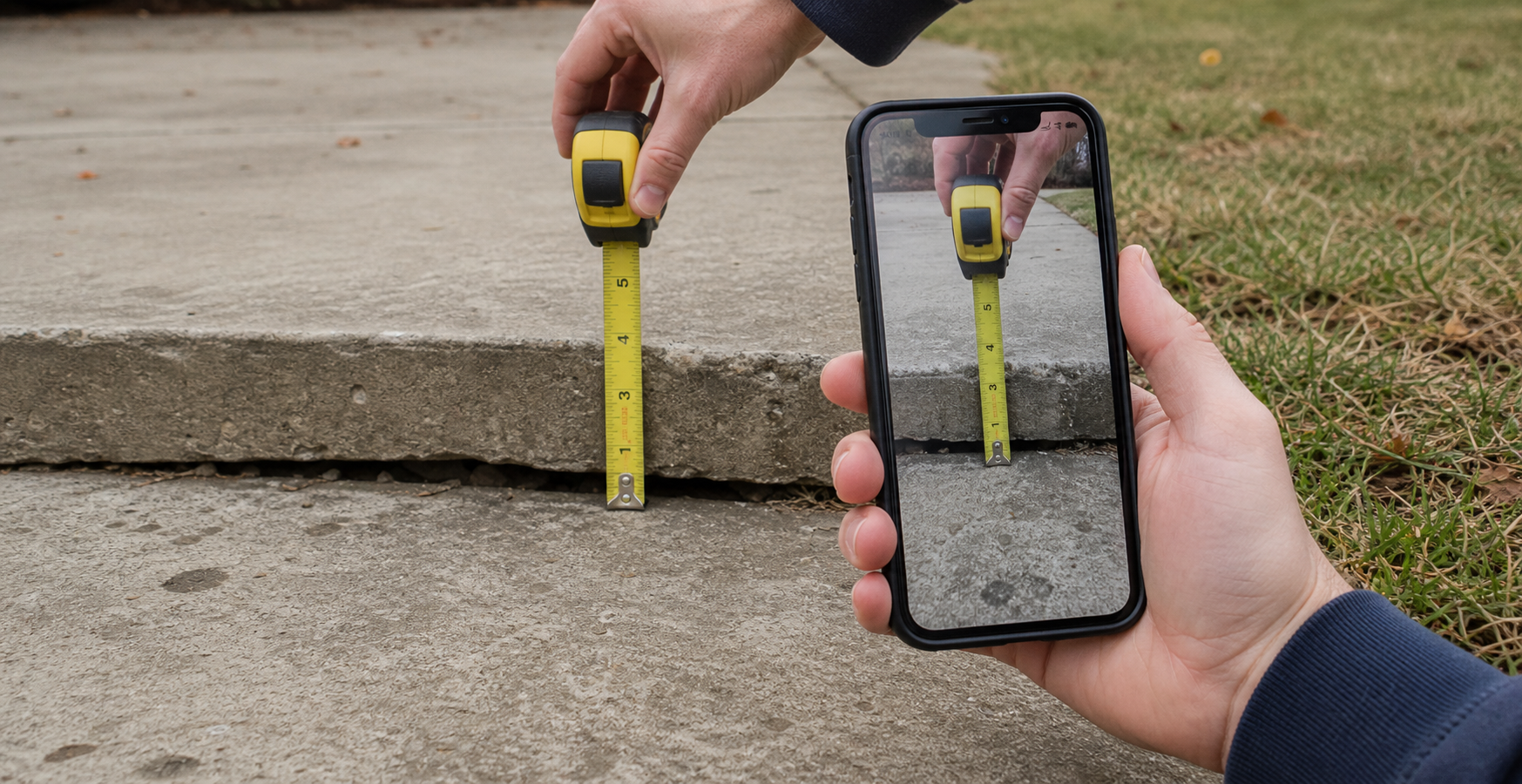
If part of your driveway, sidewalk, patio, garage floor, or front steps has sunk, you may not need to tear it out and replace it. Polyurethane concrete lifting—also called poly lifting, foam jacking, or concrete leveling—can raise many settled slabs through small injection holes with minimal disruption.
Homeowners searching for this process by name can also visit our dedicated Kansas City polyjacking service guide for applications, cost factors, comparisons, and estimate information.
For Kansas City-area homeowners, this approach is especially useful because local clay soils, changing moisture levels, erosion, and freeze-thaw cycles can leave empty spaces beneath concrete. When the soil no longer supports a slab evenly, the concrete can sink, tilt, collect water, or create a trip hazard.
How polyurethane concrete lifting works
A trained concrete leveling crew first evaluates the slab, the direction it has moved, nearby drainage, and the condition of the concrete. The goal is to fill hidden voids and carefully lift the slab back toward a safer, more useful position.
The settled concrete is inspected
The crew checks the slab, cracks, joints, drainage patterns, and nearby structures. Badly crumbled concrete may need replacement, but many solid slabs that have simply settled can be lifted.
Small injection holes are drilled
Small, strategically placed holes give the lifting material access to the empty space below while keeping the repair area relatively clean and unobtrusive.
Polyurethane material is injected
A two-part polyurethane material reacts and expands into a strong, lightweight foam that flows into voids and helps stabilize loose areas beneath the concrete.
The slab is lifted gradually
As the foam expands, the crew monitors the slab and controls the lift in small increments to bring settled sections closer to the intended height.
The holes are patched
After the lift, the injection holes are patched and the area is cleaned. Many surfaces can return to normal use much sooner than after full replacement.
Why Kansas City concrete settles
The concrete itself may still be strong while the base below it has weakened. Common causes across the Kansas City metro include:
- Expansive clay soil that swells when wet and shrinks during dry weather
- Water washing fine soil away beneath driveways, sidewalks, patios, and steps
- Poorly compacted fill soil slowly compressing after construction
- Downspouts, negative grading, or drainage problems saturating the base
- Seasonal ground movement and freeze-thaw cycles
Lifting addresses the visible settlement, but drainage also matters. Redirecting water away from the repaired area can help protect the surrounding soil and improve the long-term result.
Where polyurethane concrete leveling can be used
- Uneven driveways and driveway approaches
- Sunken sidewalks and walkways
- Patios and porch slabs
- Garage floors
- Pool decks
- Front steps and entry landings
- Concrete near foundations where water drains the wrong direction
Poly lifting vs. concrete replacement
Replacement removes the existing concrete, rebuilds the base, and pours a new slab. That may be necessary when concrete is badly broken or no longer structurally sound. When the slab is still in good condition and settlement is the main problem, concrete lifting can often be less disruptive and more cost-effective.
Polyurethane foam is lightweight, so it adds much less weight to weak soil than heavier lifting materials. It also expands to reach small voids and can provide precise lifting control. Every property is different, so an on-site evaluation is the best way to decide whether lifting or replacement makes more sense.
Signs you may need concrete lifting
- One slab sits lower than the slab beside it
- Water pools on a driveway, patio, or walkway
- A sidewalk edge has become a trip hazard
- Concrete slopes toward the house or garage
- There is a visible gap beneath a slab edge
- A previously level surface has gradually sunk
How long does polyurethane concrete lifting last?
A well-planned repair can provide a durable result, but longevity depends on slab condition, soil support, drainage, and the cause of the original settlement. A responsible evaluation should consider where water goes and whether the surrounding soil is likely to remain stable.