Polyurethane Foam vs. Mudjacking
Why Metro Wide uses polyurethane instead of traditional mudjacking.
Mudjacking and polyurethane foam lifting both raise settled concrete by placing material beneath the slab. The important differences are the material, injection-hole size, added weight, curing speed, and the amount of control available during the lift.
What Is Mudjacking?
Traditional concrete raising with a cement-based slurry.
Mudjacking—also written as mud jacking and sometimes called slabjacking—raises sunken concrete by drilling holes through the slab and pumping a mixture containing water, soil or sand, and cement beneath it. Pressure from the pumped slurry fills space and pushes the concrete upward.
Mudjacking has been used for decades and may have a lower initial price in some markets. However, it requires larger drilled holes and places a dense slurry onto soil that may already have settled or lost support.
What Is Polyurethane Leveling?
Lightweight foam delivered through smaller ports.
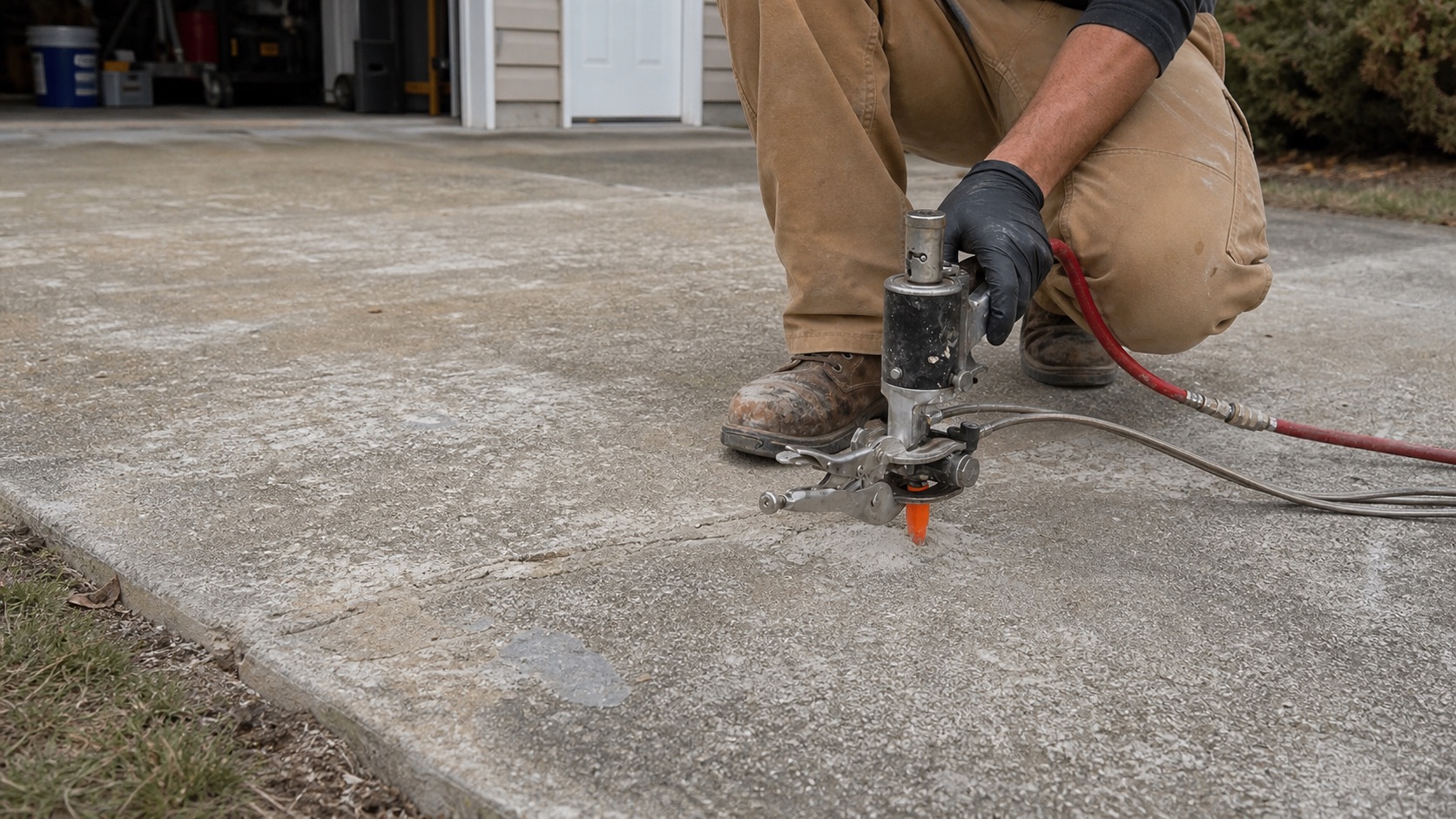
Polyurethane concrete lifting—also known as foam jacking, polyjacking, or poly lifting—uses a two-part structural material injected as a liquid. It reacts and expands beneath the slab, filling unsupported space and raising low concrete in controlled stages.
Metro Wide uses this process for eligible Kansas City-area driveways, sidewalks, patios, garage floors, steps, porches, pool decks, commercial floors, and other structurally usable slabs.
Explore our complete Kansas City polyjacking service guide →
Concrete Leveling Comparison
Polyurethane foam lifting vs. mudjacking.
No repair method can correct every concrete problem. This side-by-side comparison explains why Metro Wide prefers polyurethane for the slabs we service.
| Comparison | Polyurethane foam lifting | Traditional mudjacking |
|---|---|---|
| Injection holes | Small ports, commonly about 3/8–5/8 inch | Larger holes, commonly about 1–2 inches |
| Lifting material | Expanding structural polyurethane foam | Water, soil or sand, and cement-based slurry |
| Added weight | Lightweight material adds relatively little load below the slab | Dense slurry adds substantially more material weight |
| Void filling | Liquid components react and expand beneath the concrete | Pumped slurry flows beneath the slab from each injection point |
| Return to use | Fast-curing foam allows many surfaces to return to use quickly | Slurry generally needs more time to set before normal use |
| Moisture | Cured lifting foam is moisture resistant | Cement-based slurry can be affected by site drainage and erosion conditions |
| Surface appearance | Smaller patched ports are generally less noticeable | Larger drilled holes create larger surface patches |
| Best decision | Depends on slab integrity, access, soil, drainage, loads, and fixed points | Depends on slab integrity, access, soil, drainage, loads, and fixed points |
Why Polyurethane?
Smaller holes, lighter material, and a controlled lift.
- 01
Less visible ports
Small injection holes leave smaller patches than the larger openings typically used for mudjacking.
- 02
Less added weight
Lightweight foam supports the slab without placing a heavy cement slurry onto weakened soil.
- 03
Fast curing
The expanding material cures quickly, helping reduce interruption around homes and commercial properties.
- 04
Expanding void fill
The material begins as a liquid and expands beneath the slab to reach unsupported space.
Kansas City Concrete Settlement
The lifting material is only part of the repair.
Expansive soil, poor original compaction, erosion, leaking drainage, and seasonal moisture changes can all contribute to settled concrete in Missouri and Kansas. A good plan must consider why the slab lost support—not simply pump material below it.
Metro Wide evaluates cracks, drainage, soil gaps, doors, foundations, curbs, coping, neighboring panels, and other fixed elevations before planning the lift. Severely broken or deteriorated concrete may need replacement instead of foam lifting or mudjacking.
Mudjacking Questions
Questions homeowners ask before choosing a method.
Is polyurethane concrete lifting better than mudjacking?
For many eligible slabs, Metro Wide prefers polyurethane because of its smaller ports, lightweight material, quick cure, and controlled expansion. Slab condition and site limitations still determine whether lifting is appropriate.
Is polyjacking more expensive than mudjacking?
Prices vary by project, access, slab size, material quantity, and local provider. Mudjacking may have a lower upfront price in some cases. The size of the repair, disruption, curing time, patch appearance, and material characteristics should also be considered.
Are the injection holes smaller than mudjacking holes?
Yes. Industry guidance commonly describes polyurethane ports around 3/8–5/8 inch, compared with traditional mudjacking holes around 1–2 inches.
Will foam lifting repair existing cracks?
No. Leveling can restore support and improve slab elevation, but existing cracks remain. Crack or joint sealing is a separate service and cosmetic results depend on the concrete’s condition.
Can every sunken slab be lifted?
No. Concrete that is severely cracked, deteriorated, restricted by fixed structures, or affected by unresolved site conditions may need a different repair or replacement.
Compare Your Options
Send photos for a remote concrete-leveling quote.
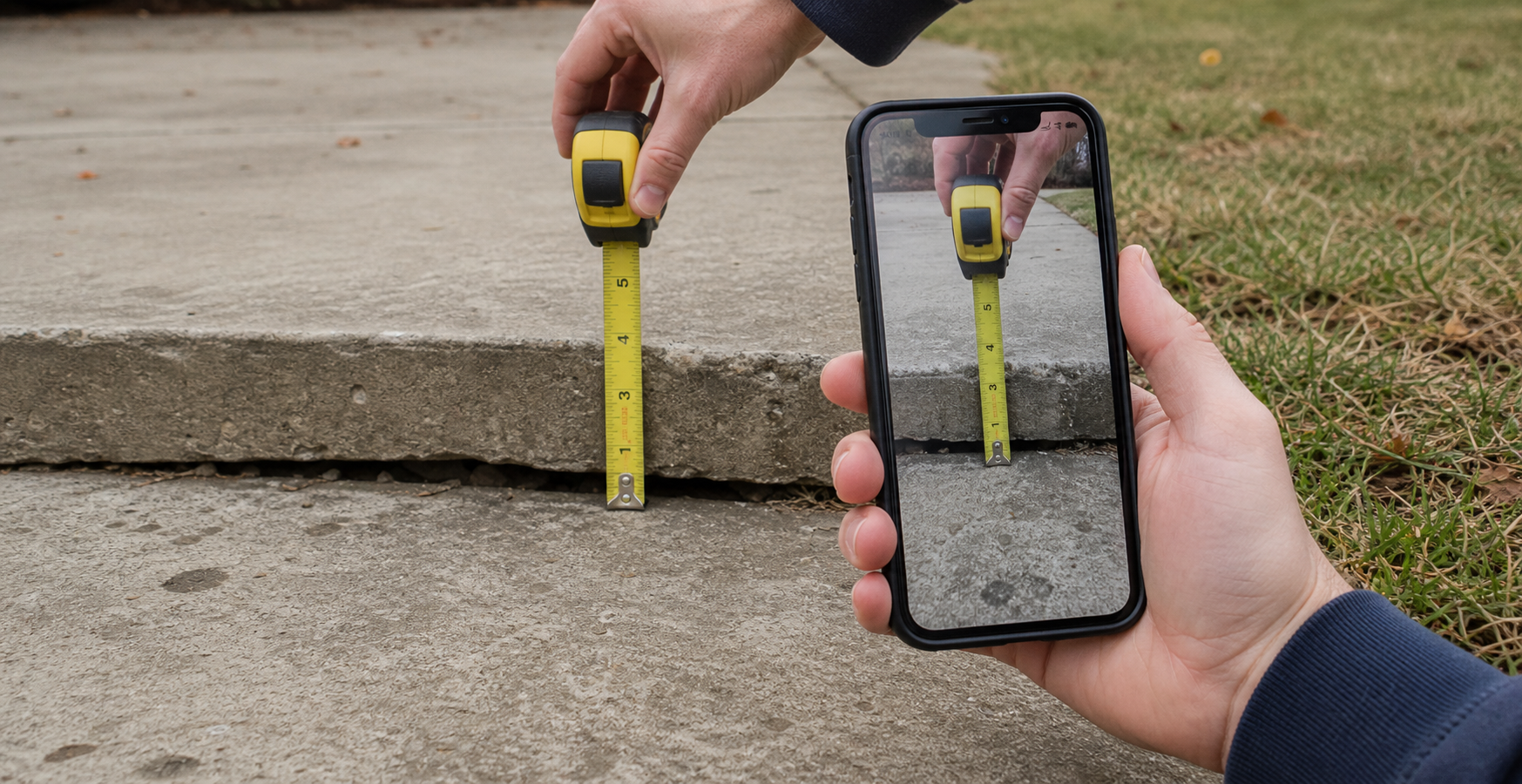
No initial onsite visit is required. Include wide and close photos, basic measurements, and the project address.
Text Photos for a Quote