Driveways
Raise settled panels at the garage, sidewalk, or street approach without automatically replacing the slab.
Kansas City Polyurethane Concrete Lifting
Raise and stabilize sunken driveways, sidewalks, patios, garage floors, steps, and other structurally usable concrete with lightweight expanding polyurethane foam.
Quick Answer
Polyjacking—also called polyurethane concrete lifting, polyfoam lifting, foam jacking, or poly lifting—places expanding structural foam beneath settled concrete. The foam fills hidden voids and raises the slab in controlled stages.
When the concrete itself is still structurally usable, polyjacking can be a faster, cleaner, and less disruptive alternative to tearing it out and pouring a new slab.
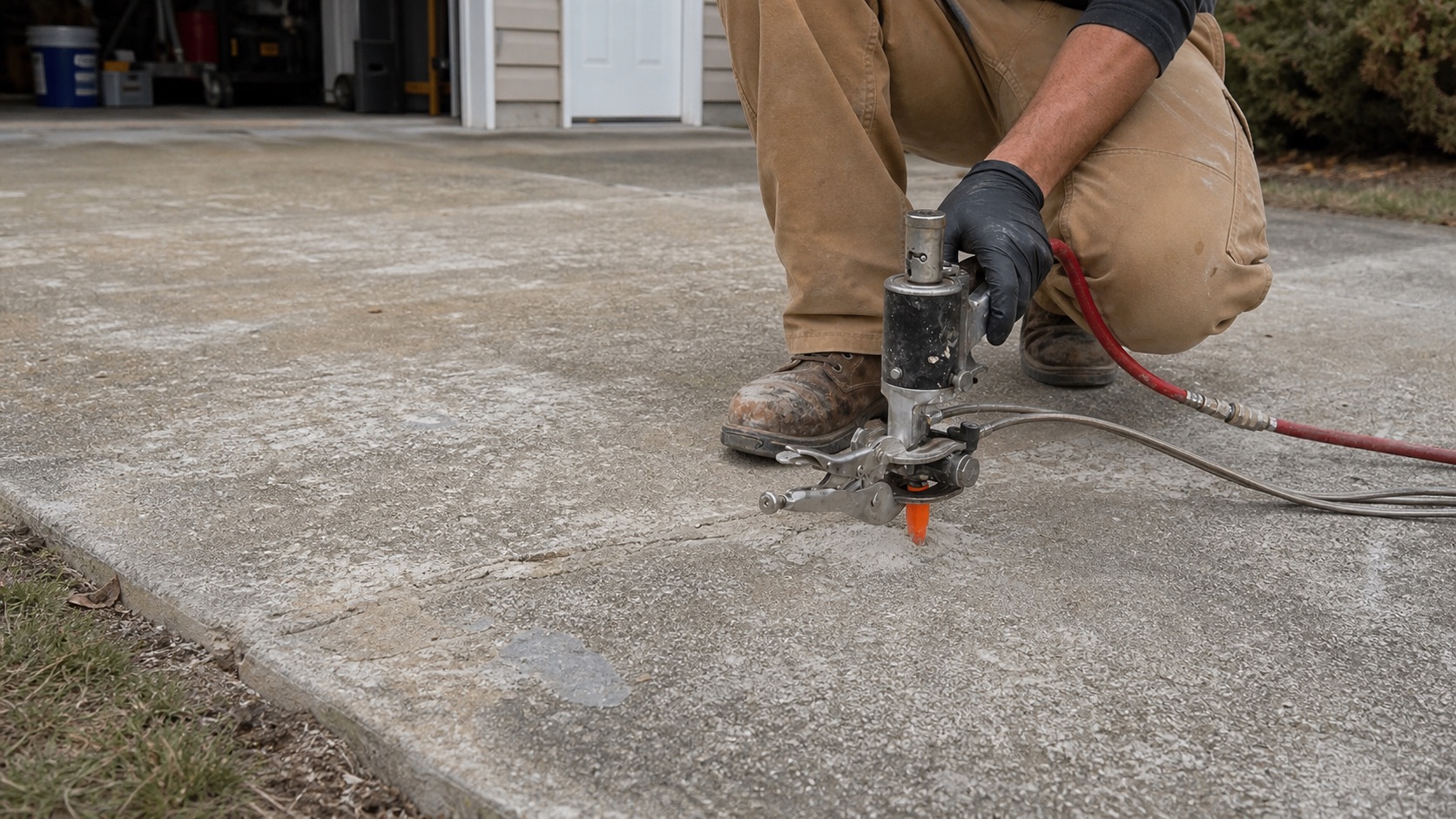
How Polyjacking Works
We evaluate slab condition, settlement, voids, access, drainage, cracks, and nearby fixed surfaces.
Injection locations are selected so the concrete can be lifted gradually and monitored throughout the repair.
Two-part polyurethane enters as a liquid, expands beneath the slab, and fills unsupported space.
The slab is raised toward the planned elevation, the ports are patched, and the work area is cleaned.
Concrete We Level
Every slab must be evaluated, but polyurethane foam can be used for many residential and commercial concrete applications.
Raise settled panels at the garage, sidewalk, or street approach without automatically replacing the slab.
Correct uneven joints and reduce trip hazards on residential and commercial walkways.
Restore support beneath outdoor slabs and improve areas that hold water or slope the wrong way.
Lift eligible settled sections and improve rough transitions near the garage door.
Evaluate sunken landings, step units, and entry transitions around fixed surfaces.
Improve uneven walking surfaces around eligible concrete pool-deck panels.
Why Concrete Settles
Changing moisture, expansive clay, erosion, drainage problems, and poorly compacted fill can create empty space beneath concrete. Once a slab loses even support, it may sink, tilt, collect water, or create an uneven transition.
Polyjacking addresses that lost support, but the repair plan also needs to consider why the void formed. We evaluate downspouts, grading, soil gaps, cracks, joints, doors, curbs, foundations, coping, and neighboring panels before planning a lift.
Polyjacking vs. Mudjacking
Polyjacking Cost
The cost of polyjacking in Kansas City depends on slab size, the amount of settlement, hidden void volume, required polyurethane, job access, nearby fixed surfaces, and the result that can safely be achieved. That is why a square-foot price alone rarely tells the full story.
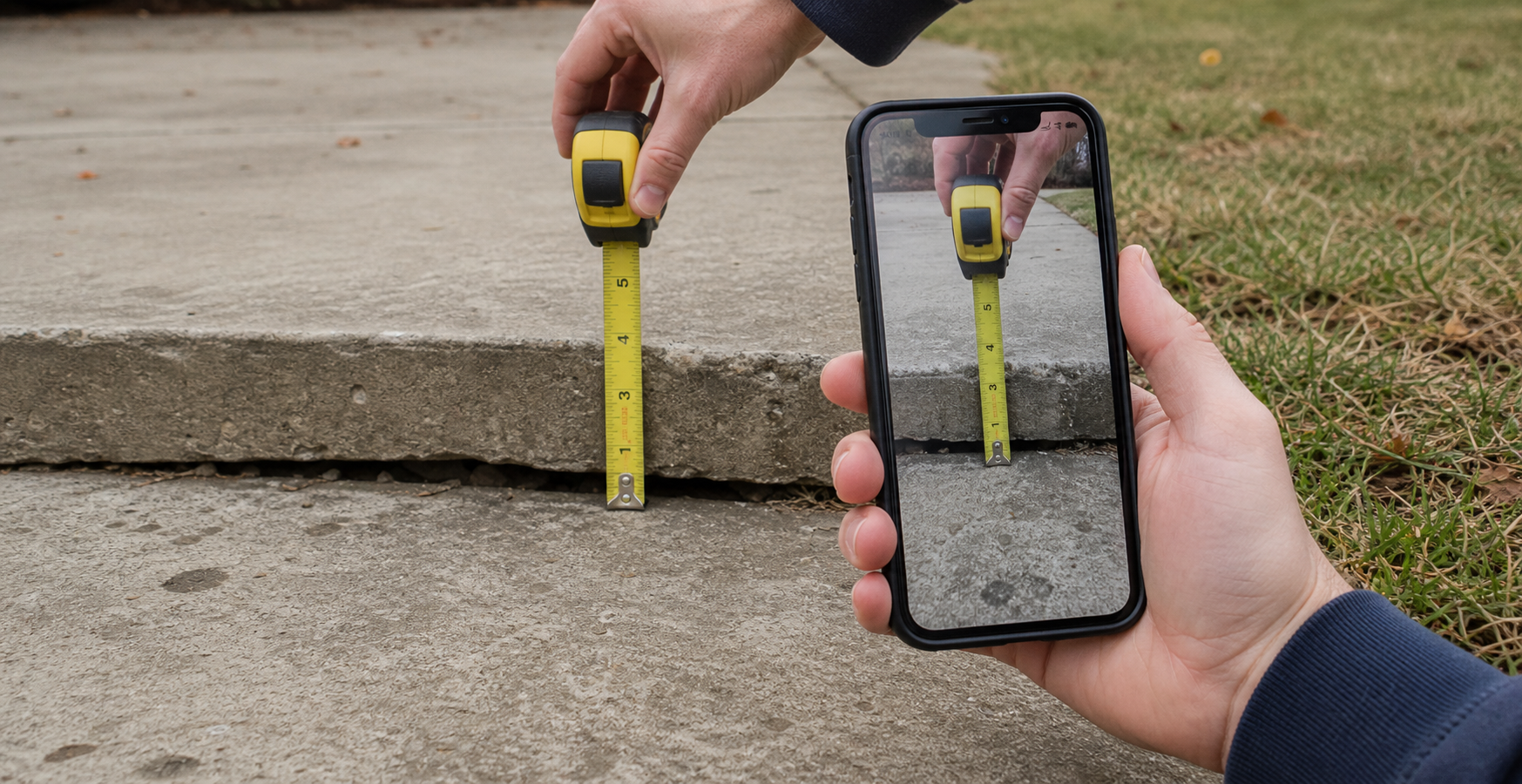
Metro Wide can often begin with a remote project review. Send a wide photo, a close view of the uneven area, approximate measurements, the height difference, and the project address.
Send Project PhotosLift or Replace?
Polyjacking is most useful when the concrete remains structurally usable and settlement is the main problem. Replacement may be the better investment when a slab is badly broken, crumbling, severely deteriorated, or unable to move safely around fixed structures.
Existing cracks, discoloration, and surface wear remain after lifting. The goal is to restore support and improve elevation—not disguise concrete that has already failed.
Compare leveling and replacement costs →Polyjacking Questions
Polyjacking injects expanding structural polyurethane foam through small ports in a settled slab. The foam fills unsupported space and raises the concrete in controlled stages.
Polyjacking is one concrete-leveling method. You may also hear it called polyurethane concrete lifting, polyfoam lifting, foam jacking, or poly lifting.
Polyjacking uses lightweight foam and smaller ports, while mudjacking uses a heavier cement-based slurry through larger holes. Slab condition, soil, drainage, access, and fixed surfaces still determine the right repair.
No. Lifting can restore support and improve elevation differences, but existing cracks, color differences, spalling, and surface wear remain visible.
No. Badly deteriorated or shattered concrete may need replacement, and attached structures or fixed elevations can limit how much a slab can safely move.
Pricing depends on the actual slab, settlement, void volume, foam quantity, access, and lifting plan. Send photos and measurements for a free project review.
Kansas City Metro
Family-owned and locally operated. Qualifying residential work is backed by our 8-year warranty.
Fast & Convenient
Send project photos, the address, and basic measurements. We can review the details remotely and follow up with a quote.
Text Project Photos Wide view · Close view · MeasurementText photos to 816-226-8707
Convenient Payment Options
We accept Visa, Mastercard, American Express, Discover, Venmo, cash, and checks. Ask about payment details when scheduling your project.
Kansas City Metro Coverage
Zoom, drag, or select a marker to explore communities within Metro Wide’s 75-mile Kansas City service radius. Scheduling varies by address and project type.
View the full service-area list →