Concrete Leveling Cost vs. Replacement
Why pay to replace a good slab when it may only need support?
If the concrete itself is structurally usable, polyurethane lifting can correct settlement without paying for demolition, haul-off, forms, new concrete, and a lengthy replacement process.
The Price of Concrete Replacement
Replacement includes much more than a new concrete pour.
A replacement proposal may include saw cutting, breaking the existing slab, loading debris, hauling and disposal, excavation, base preparation, compaction, forms, reinforcement, new concrete, finishing, control joints, cleanup, and curing protection.
Access can add expense when equipment must pass through a narrow gate, landscaping must be removed, or a driveway, business entrance, garage, or loading area must remain closed during the work.
The Price of Concrete Leveling
Pay for a focused repair instead of rebuilding everything.
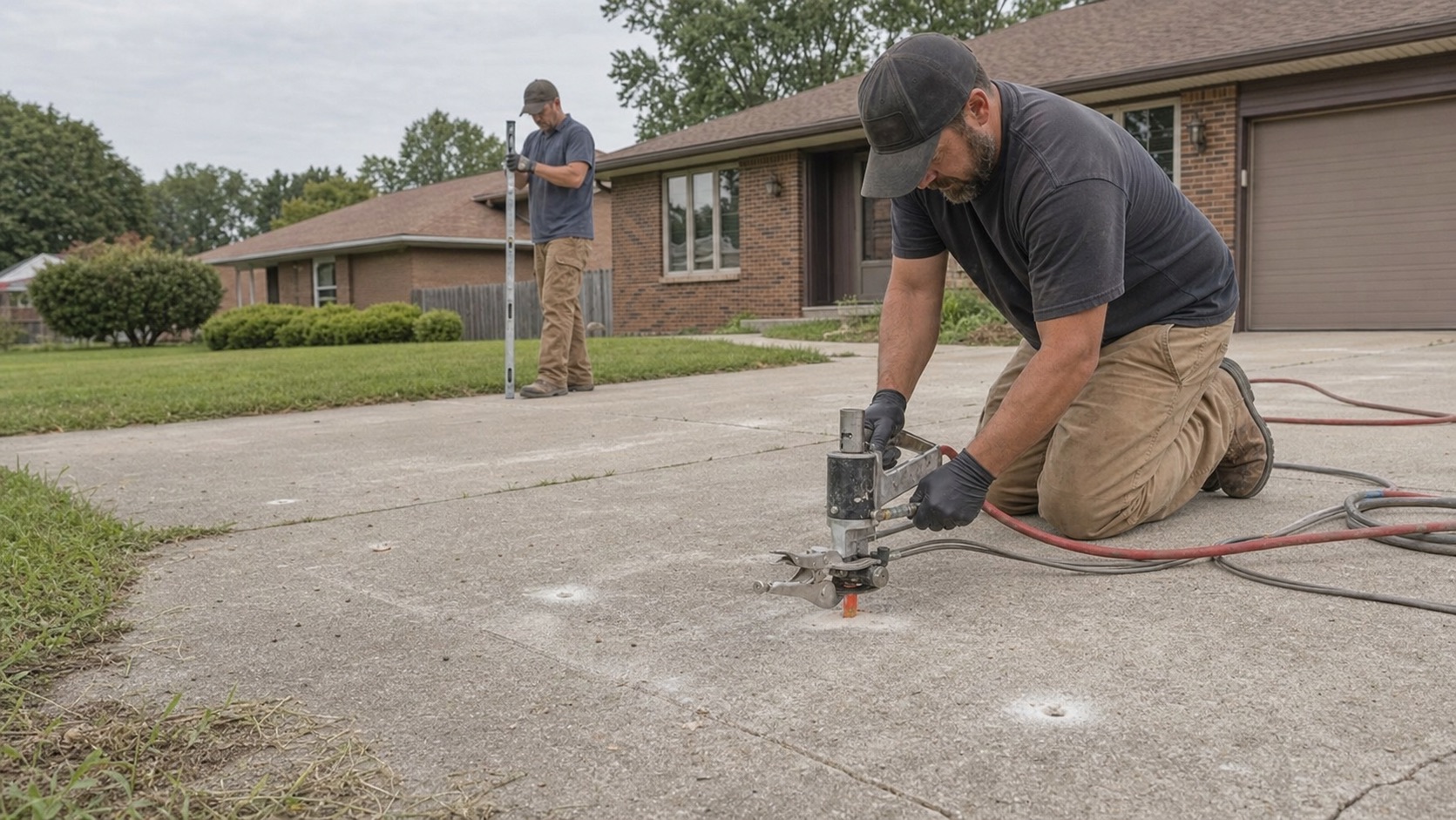
Polyurethane concrete leveling uses the slab you already own. Small ports are drilled through the settled panel and expanding structural foam is placed beneath it to fill unsupported space and raise the concrete in controlled stages.
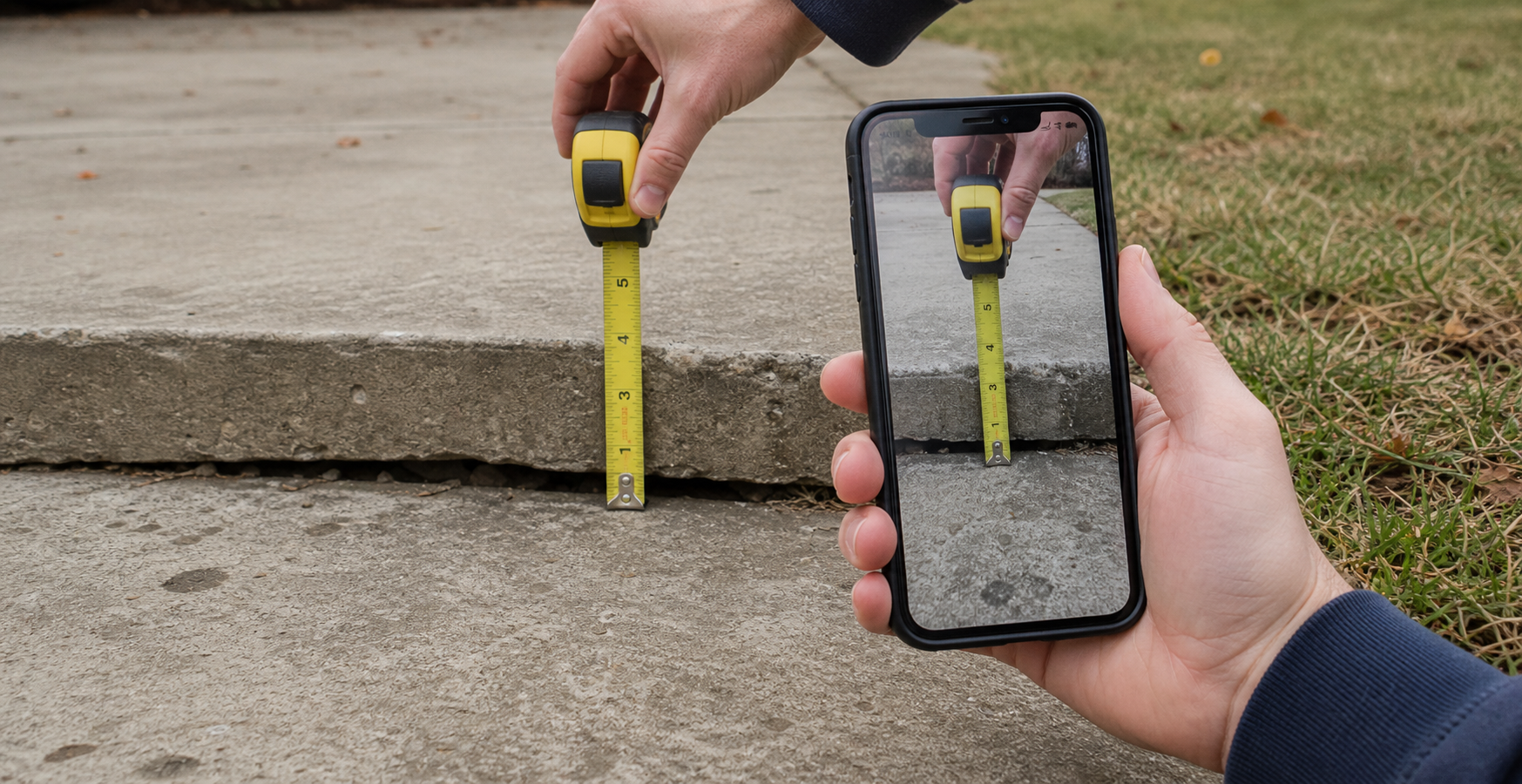
Pricing depends on the slab, settlement, void volume, access, nearby fixed surfaces, and required material. Metro Wide can begin with photos and measurements and provide a remote quote without requiring an initial onsite visit.
Full Expense Comparison
Concrete lifting versus tearing out and replacing the slab.
The lowest-looking line item is not always the lowest total project expense. Compare the labor, materials, waste, access, downtime, and property disruption included in each option.
| Cost consideration | Polyurethane concrete leveling | Concrete replacement |
|---|---|---|
| Existing concrete | Keeps the structurally usable slab already in place | Removes the existing slab and purchases new concrete |
| Demolition | No full slab demolition for an eligible lift | Breaking, cutting, equipment, and demolition labor |
| Haul-off and disposal | Minimal waste from small drilled ports | Loading, transportation, disposal, or recycling of concrete debris |
| Site preparation | Focused access for injection equipment and hoses | Excavation, subgrade preparation, compaction, and forming |
| New materials | Polyurethane quantity depends on void volume and lift | Concrete, reinforcement, forms, joint materials, and possible base material |
| Property disruption | Small work area and limited disturbance around the slab | Larger work zone with equipment, debris, and possible landscape disturbance |
| Time before use | Fast-curing foam allows many lifted surfaces to return to use quickly | New concrete requires protected curing time before normal loading |
| Appearance | Existing color, texture, cracks, and wear remain | New slab looks different from older neighboring concrete and may not color-match |
| Best candidate | Structurally usable concrete that settled because it lost support | Badly broken, crumbling, deteriorated, or unsuitable concrete |
Where Leveling Can Save
A smaller scope can mean fewer project expenses.
- 01
Keep the slab
A usable slab does not need to be purchased twice. Leveling preserves the concrete already on the property.
- 02
Skip demolition
Avoid the labor, heavy equipment, debris, hauling, and disposal associated with a full tear-out.
- 03
Reduce downtime
Fast-curing polyurethane can reduce the time a driveway, walkway, entry, or commercial area is unavailable.
- 04
Limit disruption
Small injection ports and compact equipment help keep the repair focused around the settled concrete.
When Replacement Is Worth the Expense
Leveling cannot repair concrete that has failed.
Metro Wide will not recommend lifting simply because it is the service we provide. Replacement may be the better investment when a slab is badly broken, crumbling, severely spalled, structurally deteriorated, or unable to move safely because of fixed structures.
Existing cracks do not disappear during lifting, and new foam cannot restore a worn-out concrete surface. The goal is to preserve sound concrete—not postpone replacement when the slab is no longer a suitable candidate.
Concrete Repair Cost Questions
What to know before comparing quotes.
Is concrete leveling cheaper than replacement?
It often has fewer cost categories when a slab is suitable for lifting because the project avoids full demolition, disposal, forming, and repouring. The actual savings depend on the specific slab and both complete proposals.
Why not publish one price per square foot?
Leveling cost depends on more than surface area. Settlement, void depth, foam quantity, access, slab connections, and the number of repair areas can change the project substantially. Photos and measurements produce a more useful quote.
What should I compare in a replacement quote?
Check whether demolition, hauling, disposal, base preparation, reinforcement, forms, concrete, finishing, joints, permits, cleanup, curing protection, and restoration of nearby landscaping are included.
Can leveling improve existing cracks?
Lifting may bring separated elevations closer together, but the cracks remain visible. Crack and joint sealing is separate, and severely damaged concrete may require replacement.
Can Metro Wide quote the project from photos?
Yes. Send wide and close photos, approximate slab measurements, the height difference, project address, and a short description. An initial onsite visit is not always necessary.
Compare Before You Replace
Find out whether your existing concrete can be saved.
Send photos and measurements for a remote polyurethane concrete-leveling quote.
Text Photos for a Quote