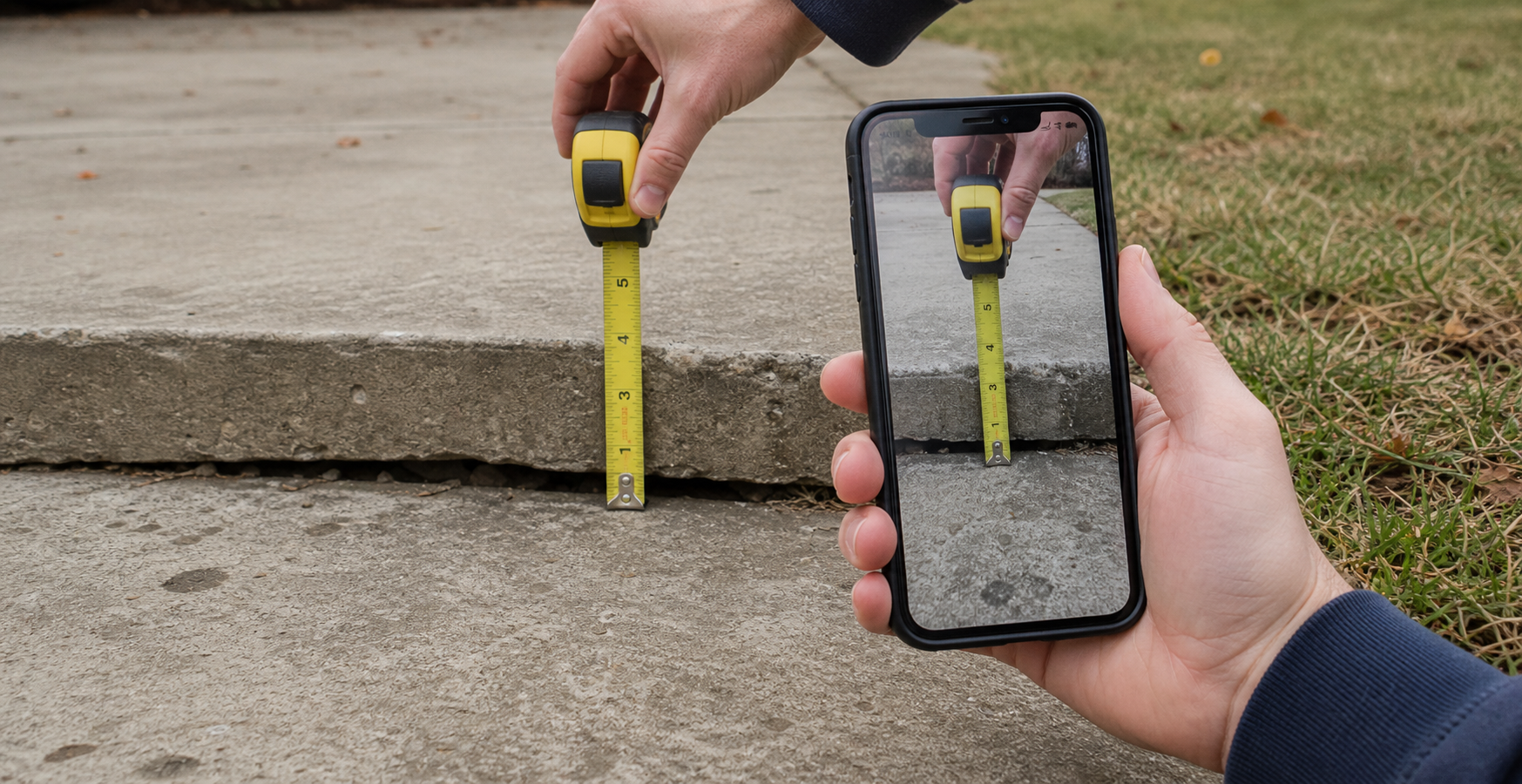
A stretch of heavy Kansas City rain can reveal concrete problems that seem to appear overnight. A driveway panel drops, a sidewalk develops a trip edge, or water starts collecting beside a patio. In many cases, the slab itself is not the original cause. The soil supporting it has changed.
Understanding why concrete settles can help you spot trouble early, protect surrounding areas from drainage problems, and decide whether concrete leveling may be a practical alternative to tearing out and replacing the slab.
Why heavy rain causes concrete settlement
Concrete is strong, but it depends on stable soil underneath. When repeated storms saturate the ground, the soil can soften, shift, or lose its ability to support the weight above it. Kansas City properties often contain clay-rich soils that expand when wet and shrink as they dry. That movement can leave empty spaces beneath a slab.
Water can also travel along cracks, joints, downspout discharge areas, and the edges of driveways or sidewalks. As it moves, it may carry away small particles of soil. Poorly compacted fill beneath newer concrete can settle over time as well. Once the base is uneven, sections of concrete may sink or tilt.
Warning signs to watch for
- One slab edge sits lower than the section next to it
- Rainwater pools on a driveway, sidewalk, patio, or near the foundation
- A new trip hazard appears along a walkway or between concrete panels
- Gaps open beneath steps, stoops, garage aprons, or slab edges
- Cracks widen, return after being filled, or show a noticeable height difference
A small change in elevation can affect both safety and drainage. Water that flows toward a garage, foundation, or entryway deserves particular attention.
Where settlement commonly appears
Settlement is common in driveways, sidewalks, patios, pool decks, garage floors, and front stoops. Areas near downspouts, recently disturbed soil, utility trenches, or the edges of a foundation can be especially vulnerable.
The pattern matters. A mostly intact slab that has dropped is different from concrete that is badly crumbled, deeply cracked, or deteriorated throughout.
Concrete leveling versus replacement
Concrete leveling is designed to raise and support settled sections so they better match the surrounding surface. When the concrete is still structurally sound, polyurethane lifting may require less disruption than removing and pouring a new slab. It addresses the uneven surface instead of simply covering a crack.
Replacement may be the better choice when a slab is severely broken, extensively deteriorated, or unable to be lifted as one stable section. A professional evaluation should consider the condition of the concrete, the amount of settlement, nearby drainage, and the reason the slab moved.
What homeowners can do after a storm
- Keep gutters clear and direct downspouts away from concrete and the foundation
- Watch where water flows and correct areas that repeatedly wash out or stay saturated
- Seal open joints and cracks when appropriate to reduce water entry
- Inspect sidewalks, driveways, patios, and steps after extended periods of rain
- Have noticeable settlement evaluated before the height difference becomes a larger hazard
Get a clear recommendation for your concrete
If your driveway, sidewalk, patio, pool deck, garage floor, or stoop has settled, Metro Wide Concrete Leveling can help you understand your options. We serve homeowners throughout the Kansas City metro area and can explain whether polyurethane concrete lifting is a good fit for your project.
Don’t Replace It... Raise It!